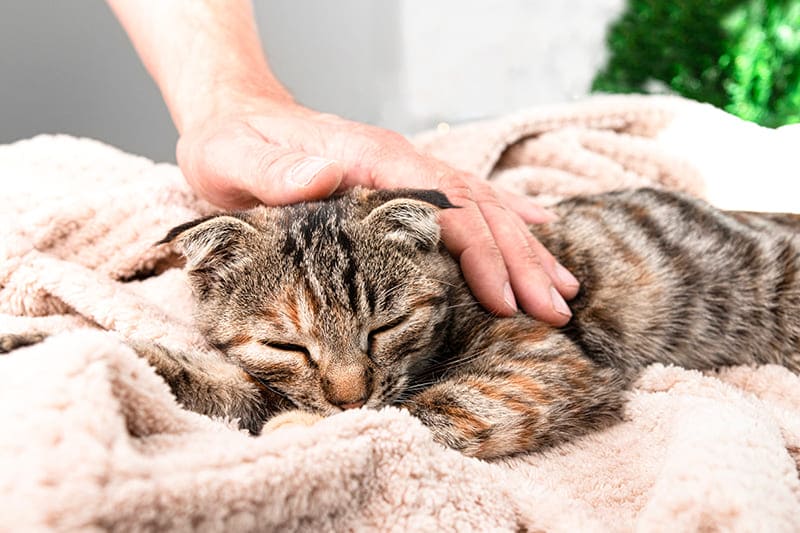
Vomiting in cats, what care is provided at home?
In the vast majority of situations, if your cat vomits, you will need to seek urgent medical attention. For the comfort of your pet, and yourself, we offer the services of a veterinarian at your home. With the appropriate equipment, we can provide first aid, examinations and treatments.
Once at your home, our veterinarian can provide the following care:
- A full clinical examination of your cat,
- Initial blood tests: urea and creatinine (kidney function), blood glucose and lactate,
- Abdominal ultrasound to check for the presence of effusion, for example.
Once the diagnostic hypotheses have been made, we are able to treat your cat on-site:
- Subcutaneous or intramuscular anti-vomiting treatment
- Gastric acid treatment, combined with a digestive plaster
- Home infusion for the most severe cases, when your cat shows the first signs of dehydration.
At the end of the consultation, if our vet considers that urgent additional treatment is necessary, we will organise the transfer of your cat to the nearest veterinary clinic or veterinary hospital.
Frequently asked questions about vomiting in cats
Can my cat vomit because of hairballs?
Yes, the main cause of mild vomiting in cats is hairballs that form in the stomach as a result of hair licking. These bezoars are regurgitated in a rasping cough.
Is it necessary to give a special diet to prevent vomiting?
In cats, a stable diet is important for digestive health. There is no specific anti-vomiting diet. Avoid changing food too frequently or too abruptly.
My cat vomits regularly. Is it serious?
Chronic vomiting can be part of your cat's physiology, typically hairballs. Vomiting once in a while can be normal. However, regular vomiting that increases in frequency should be taken seriously.